
Why Construction Standards Matter in Los Angeles Luxury Home Building


What Sets Los Angeles Luxury Home Construction Standards Apart
Two manufacturers can produce products that appear similar on the surface.
Both may meet regulatory requirements. Both may look refined. But the difference between a mass-produced product and a performance-driven one is not aesthetics. It is how the product is specified, engineered, and controlled.
Luxury home construction in Los Angeles works the same way.
In practice, Los Angeles luxury home construction standards determine how architectural intent is translated into real-world execution, coordination, and long-term performance.
At Bur Oak Building Co., we write and enforce our own construction standards because experience alone does not create consistency. In a market defined by wildfire exposure, moisture risk, seismic forces, and increasing insurance scrutiny, high-end homes are built through discipline, not improvisation.
Building Code Is the Baseline, Not the Benchmark
Building code establishes minimum life-safety requirements. It allows a home to be built legally. It does not define precision, longevity, or long-term performance.
Many luxury homes are constructed to code and finished beautifully, yet still experience issues years later. Subtle movement. Moisture intrusion. Visual misalignment that becomes more noticeable over time.
These problems are rarely failures of design intent. They are failures of execution.
We explore this pattern in more depth in why modern luxury homes in Los Angeles fail, where the root cause is almost always the absence of clearly defined construction standards.
High-end building begins where minimum requirements end.
Habits Build Homes. Standards Build High-End Homes.
Most residential construction operates on habits.
Habits vary by crew, by schedule pressure, and by circumstance. They rely on individual judgment and informal expectations.
High-end builders operate differently. They rely on written standards.
Construction standards define how work is sequenced, how tolerances are held, and where responsibility lies between trades. They remove ambiguity before it becomes costly. They ensure outcomes do not depend on who happens to be on site.
That distinction is what separates an average builder from a truly high-end one.
Why the Same Plans Can Produce Very Different Prices
One of the most common questions owners ask when working with an architect is why bids can vary so widely for what appears to be the same set of drawings.
The assumption is often that the difference is margin or efficiency.
In reality, the difference is almost always scope.
Architectural drawings describe intent. They do not fully define execution. That gap must be filled by the builder, and how it is filled varies significantly.
Some builders price to minimum code and typical habits. Others price to internal standards that control geometry, sequencing, tolerances, and long-term performance. On paper, both bids may appear to cover the same project. In practice, they are not building the same house.
This is why comparing bids without understanding how each builder defines scope can be misleading. A lower price often reflects fewer defined standards and greater reliance on field improvisation. A higher price typically reflects more decisions made upfront and fewer compromises pushed downstream.

This dynamic is especially pronounced in Los Angeles, where wildfire exposure, moisture risk, and insurance considerations make execution discipline a material factor in long-term outcomes.
Understanding what is actually being built, not just what is drawn, is essential.
Why Specification-Driven Builders Operate Differently
Luxury homes are complex systems. Without written standards, performance depends too heavily on field improvisation.
Standards shift construction from reaction to intention.
They force critical decisions to happen early, when they are inexpensive to address, rather than late, when they become compromises. They also align every trade around the same expectations long before finishes arrive.
This approach is especially important in Southern California, where moisture control, wildfire resilience, and long-term durability are inseparable from design. We address that relationship in greater detail in wildfire-resilient home construction in California.
What Construction Standards Actually Control
Bur Oak does not publish its internal specifications in full. They are part of how we operate. But understanding what standards control explains why they matter.
Standards control geometry, ensuring that a home begins square and remains disciplined throughout construction.
Standards control timing, preventing materials and finishes from being installed before conditions are appropriate. Many long-term failures are sequencing failures, not material failures. This is particularly true with moisture, which we examine in moisture control for luxury homes in Los Angeles.
Standards control interfaces, defining responsibility where systems meet so issues are resolved once rather than patched repeatedly.
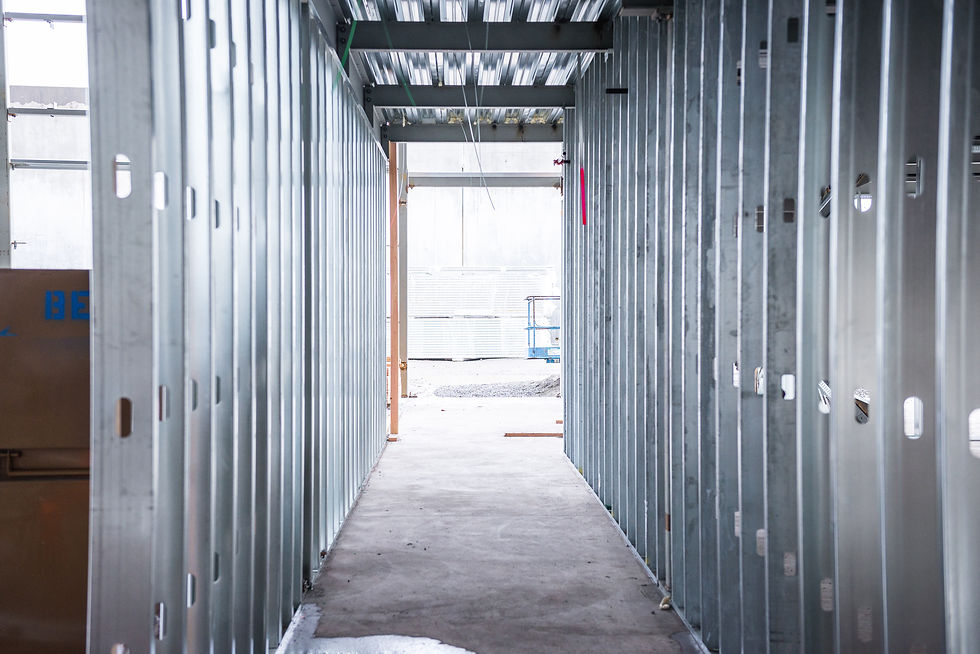
Standards control finish expectations, ensuring that visual precision is intentional, repeatable, and consistent across projects.
Why Most Builders Avoid Written Standards
Writing and enforcing construction standards requires technical depth, time, and consistency. It also removes flexibility.
Flexibility allows builders to move quickly and absorb inconsistency. Standards expose it.
Not every builder is equipped to operate at a specification-driven level. Just as not every manufacturer produces performance-engineered products, not every builder is structured to deliver repeatable, high-end outcomes.
Bur Oak chooses predictability over improvisation.
A Glimpse Into How We Operate
To provide insight into how Bur Oak approaches construction, we offer a limited preview of our internal standards.
This excerpt is not a marketing brochure. It is a real working specification drawn directly from our field standards. It demonstrates how expectations are written, enforced, and verified long before finishes are installed.

The purpose is not to publish the entire system, but to show that one exists.
Why This Matters to Homeowners in Los Angeles
For homeowners, construction standards translate directly into outcomes.
Fewer long-term issues because critical decisions are verified rather than assumed. Better finish quality because geometry and sequencing are controlled.
Clear accountability because expectations are defined before work begins.
In Los Angeles, standards increasingly influence insurance eligibility, maintenance costs, and resale value. Insurance carriers now evaluate construction risk, not just location, a shift we explore further in wildfire insurance and home design in California.
The Bur Oak Building Philosophy
Bur Oak Building Co. does not compete on being the fastest or the cheapest luxury home builder in Los Angeles.
We compete on discipline.
Luxury is not defined by finishes alone. It is defined by what is specified, enforced, and protected when no one is watching.
Planning a Luxury Home in Los Angeles
If you are planning a high-end custom home in Los Angeles, especially in hillside or wildfire-prone areas, the most important decisions happen early.
Before concrete. Before framing. Before systems are concealed.
If a builder cannot clearly explain their construction standards, they are offering reassurance rather than a process.
Bur Oak builds from a written, enforceable baseline because truly high-performance luxury homes require it.


Comments