
Why Wildfire-Resilient Luxury Homes Fail - Los Angeles (And How Florida Logic Solves It)
Updated: Nov 17, 2025

The major misconception in Los Angeles is that homes burn down once flames arrive.
Reality:
60–90% of home ignitions occur from embers
—not direct flame—per Cal Fire’s research and the Wildfire Home Retrofit Guide. These embers travel miles ahead of the fire, slip into gaps, ignite attic spaces, and exploit weaknesses in architectural details.
Most LA luxury homes fail because of:
exposed wood-framed soffits
poorly detailed roof-to-wall joints
vented attics with unprotected openings
unsealed roof underlayments
combustible cladding over ventless assemblies
large glass walls with weak track systems
untreated steel that warps under radiant heat
foam insulation that melts or smolders
wall assemblies that trap heat and ignite internally
Florida’s hurricane-resilient systems eliminate many of these failure points by default.
They’re tighter, stronger, less combustible, and more corrosion-resistant — and when adapted correctly, they produce the most resilient wildfire assemblies available today.
1. Wall & Envelope Assemblies:

Why Hurricane-Grade Construction Outperforms Standard WUI Homes**
Los Angeles is still dominated by wood framing, foam insulation, and house wrap.
These materials are:
combustible
sensitive to radiant heat
prone to melting and smoke absorption
vulnerable at fastener penetrations
dependent on perfect installation to perform
By contrast, our Florida experience built a different standard:
Bur Oak Envelope Strategy (Florida → LA Application)
Concrete or CMU cores in key structural areas for non-combustible mass.
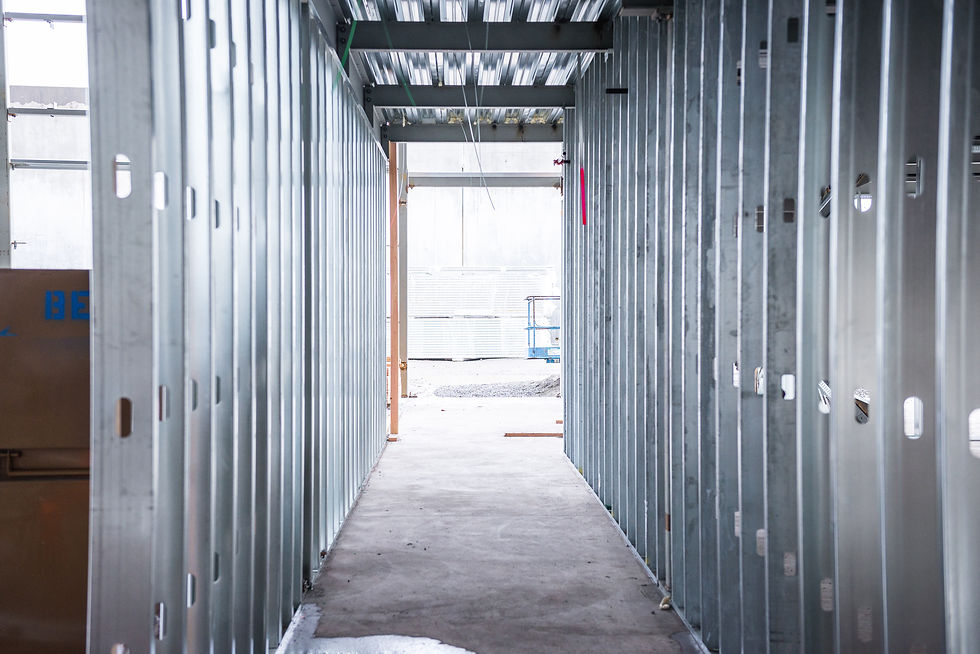
Metal framing instead of wood in high-exposure elevations.
Continuous liquid-applied WRBs (no laps, no wind tears, no ember gaps).
Mineral wool insulation (non-combustible, hydrophobic, heat stable).
Metal furring/rainscreen systems to vent heat and eliminate ignition paths.
Fiber cement, stucco, or metal panel exteriors — all non-combustible.
Non-corrosive fasteners that won’t weaken under heat or humidity.
Why this matters: Radiant heat preheats standard wall assemblies until they ignite internally. Our assemblies remain stable, breathable, and non-combustible even under prolonged exposure.
This is the single biggest leap above typical LA luxury builders.
2. Window & Slider Systems:

Where Impact-Rated Logic = Wildfire Defense**
Large expanses of glass are a hallmark of LA luxury design — and one of the top points of wildfire failure.
Standard California sliders often have:
loose tolerances
vulnerable track systems
non-intumescent weep holes
aluminum frames that distort under heat
seals that relax when exposed to hot air
hardware that corrodes or binds
Our Florida background flips this on its head.
Why hurricane window logic is superior for wildfires:
Reinforced frames → resist warping under radiant heat
Laminated or tempered glass → withstand heat exposure far longer
Tighter tolerances → reduce smoke and ember infiltration
Corrosion-proof hardware → performs when exposed to heat & moisture
Multi-point locks → maintain seal integrity
Stronger track assemblies → reduce vulnerability at the weakest point of glass walls
These systems maintain structural and thermal stability when typical sliders fail.
This is a major differentiator.
3. Roofing Assemblies:

Concrete Logic for Ember Defense**
Most LA homes rely on:
tile over batten
vented eaves
ridge cap gaps
exposed underlayment edges
combustible fascias
unsealed gutters
In Florida, these details would never survive a hurricane.
Our roofing assemblies use:
tapered concrete decks (not foam)
fully adhered membranes (no uplift, no ember travel under roofing)
non-combustible soffits and closed eaves
reinforced metal drip edges
boxed-in fascia details
metal gutter guards
fire-rated cap flashings
A sealed, adhered, concrete-backed roof is one of the strongest wildfire defenses possible because:
Embers cannot get under it.
Heat cannot ignite it.
Wind cannot lift it.
4. Mechanical Systems:

Smoke Control Informed by Hurricane Pressure Science**
California Title 24 requires continuous ventilation. Wildfires require shutting down outdoor air.
Most builders don’t know how to reconcile this.
In Florida, airtight pressure management is already essential for humidity control.
We adapt the same principles:
Bur Oak Mechanical Strategy
Whole-home positive pressure systems
ERV/HRV units with wildfire mode logic
Seal-able fresh air intakes
MERV 13–16 filtration minimum
Smoke-optimized supply paths
Sealed mechanical closets
Metal ducting where required
Hurricane logic solves wildfire smoke challenges elegantly.
5. Hardscape, Landscaping & Site Strategy:

Florida Durability Meets California Wildfire Zones
Our Florida-based material palette naturally avoids combustible items:
no wood planters
no untreated fencing
no organic claddings
no exposed steels
no vented soffit cavities
We naturally default to:
concrete terraces
stone veneers
metal fencing
non-combustible decking
irrigated low-oil vegetation
large-format pavers
protected slopes
This is exactly the ecosystem you need for wildfire defense.
This is not “doing more.
”It’s doing what we’ve always done — but reinterpreted for California.
What This Means for Architects, Homeowners & Designers
1. Your home becomes dramatically more resilient than WUI minimums.
We exceed code because code is not designed for luxury longevity.
2. You can pursue modern design without structural vulnerability.
Large glass → safe.
Flat roofs → safe.
Cantilevers → safe when detailed correctly.
3. You get materials with long-term performance, not temporary solutions.
Corrosion-resistant means no hidden decay. Non-combustible means no sudden ignition risk.
4. You eliminate most wildfire failure modes simply by building smarter.
Not thicker.
Not uglier.
Not fortress-like.
Just smarter.
A Final Word
Luxury homeowners in Los Angeles deserve homes that are both beautiful and defensibly built.
Bur Oak isn’t trying to meet wildfire standards —we’re redefining them by blending Florida hurricane logic with California building science.
If you’re looking for a home that stands the test of fire, wind, time, and architecture, we’re here for thoughtful, technical conversation.
Sources
CAL FIRE – Wildfire Home Retrofit Guide (2024)
CAL FIRE – Fire Hazard Severity Zones & WUI Standards
NFPA – “How Homes Ignite in Wildfires”
California Building Code Chapter 7A
Title 24 Mechanical & Ventilation Standards
Headwaters Economics – Wildfire Retrofit Research

Comments